Aluminium Gazebos for Indian Gardens and Terraces: A Complete Planning and Buying Guide
July 10, 2026
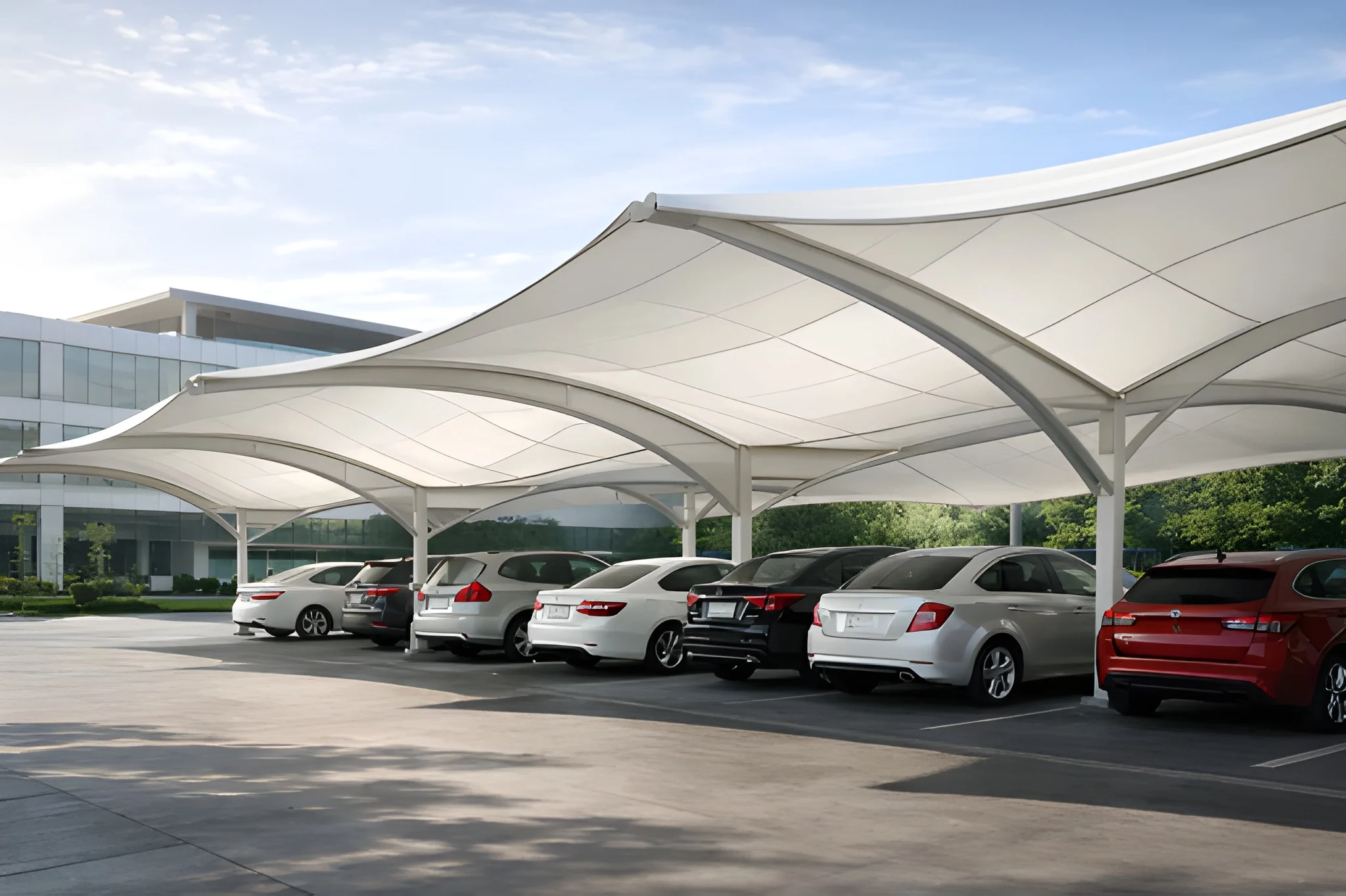
If you are planning covered parking for your home, farmhouse, villa, office frontage, or plotted property, the first question often sounds simple: Should you build a canopy or go with an RCC structure? But once the work begins, you realise this is not a small material choice. It affects civil work, cost pattern, project speed, structural load, design flexibility, and how the parking area sits with the rest of the property.
That is why the debate around an aluminium car parking canopy in India is not really about trend versus tradition. It is about which investment makes more sense for how Indian properties are built and used now. Some homeowners want a quicker, lighter, more design-led system. Others assume RCC must be stronger because it feels more permanent. The truth lies somewhere between the two assumptions.
We at Fabricasto look at covered parking in that larger sense. Our product range includes Car Parking Shelters in the outdoor category, designed to protect against sun, rain, and environmental exposure. That framing matters because a parking cover should not be treated as a leftover structure once the main house is done. It affects usability, frontage character, and long-term maintenance from the moment it goes up.
Before comparing the two, it helps to define them properly. An aluminium car parking canopy is usually a lighter fabricated system, often built with aluminium structural members and a roof layer chosen for weather protection, visual cleanliness, and lower long-term upkeep. Depending on the project, the roof may be sheeted, panelled, or integrated into a broader outdoor system language. It can be sized for a single car, a double car parking shade, or a larger multi-bay arrangement, depending on site conditions.
An RCC structure is a more conventional civil-built option. It depends on reinforced concrete columns, beams, slab work, shuttering, curing, waterproofing, and a more fixed construction sequence. It can feel more monolithic and permanent, but that permanence comes with heavier structural consequences and a more construction-intensive process.
So the comparison is not only material versus material. It is a fabricated lightweight system versus a built civil structure.
Indian parking conditions are rarely neutral. Cars are exposed to sharp sun, heavy rain in many regions, dust deposition, bird droppings, and hard-water staining. In cities like Delhi, Gurgaon, Noida, Jaipur, and Ahmedabad, UV and heat are major concerns. In coastal or high-humidity areas, corrosion resistance becomes a bigger concern. In plotted homes, the parking cover also becomes part of the façade story. In villas and premium residences, it can affect how the entry sequence feels.
That is why car parking design for home should not be treated like a purely utilitarian afterthought. The wrong structure can feel bulky, awkward, dark, or too permanent in the wrong place. The right one can protect the vehicle, work with the architecture, and be easier to maintain.
This also explains why many buyers now compare aluminium canopies with RCC structures rather than assuming concrete is the default answer. The broader property context has changed. Frontage design matters more. Build timelines matter more. The ability to add or modify a structure later matters more.
| Parameter | Aluminium Car Parking Canopy | RCC Parking Structure |
|---|---|---|
| Construction type | Fabricated, installed, and assembled system | Full civil-built structure with slab, columns, and curing cycle |
| Weight on site | Lighter overall structural system | Heavier dead load and stronger dependence on civil support |
| Time to execute | Usually faster once design and fabrication are ready | Slower because of shuttering, concrete work, curing, finishing, and waterproofing |
| Future modification | Easier to adapt, extend, or rework in many cases | Harder to alter without more demolition and civil intervention |
| Visual effect | Cleaner, lighter, and easier to integrate with modern properties | Heavier, more permanent, and often bulkier in appearance |
| Maintenance pattern | Depends on finish and roof type, but often lower routine upkeep | Waterproofing, cracks, stains, repairs, and finish wear may need more long-term attention |
| Best fit | Premium homes, villas, plotted properties, lighter additions, faster upgrades | Situations needing a more built-in civil extension and where structural permanence is intentionally desired |
This comparison does not mean aluminium wins every time. It means RCC should not be assumed to be the smarter investment by default.
Aluminium is valued in architecture because it gives you a strong material with much lower weight than many traditional structural approaches. The International Aluminium Institute describes aluminium building products as light, strong, weather-proof, and corrosion-resistant, which is one reason aluminium continues to work so well in outdoor architectural systems. That lighter-material logic matters even more when the structure is added to an existing property rather than planned as part of the original civil design.
An RCC roof, by contrast, adds much more permanent load. That may be manageable in a fully planned civil extension, but it changes the structural conversation. It also usually demands more from the foundations and supporting members. If the aim is a parking cover rather than a fully enclosed built room, that extra structural burden is not always the smartest use of budget or effort.
Many people assume RCC is a one-time solution because it feels solid. But concrete parking covers still need proper slope, drainage, and waterproofing if they are not meant to become long-term seepage problems. RDSO’s guidance on waterproofing in new and old construction makes the broader point clearly: repairing damage caused by water ingress is expensive, and proper waterproofing at the construction stage is essential. That matters here because a parking slab or RCC roof can easily become a source of dampness, staining, and leakage, and require long-term repairs if drainage and waterproofing are not handled properly.
A canopy has a different maintenance pattern. It still needs care, but it usually avoids some of the slab-based waterproofing risks that come with RCC. So “permanent” should not automatically be read as “easier”.
A heavy RCC projection can sometimes look too built-in, too bulky, or too disconnected from a modern residence, especially if it is added later. Aluminium canopies usually allow slimmer members, cleaner edges, and a more integrated contemporary look. That is one reason they are becoming more common in villas, bungalows, and premium plotted homes.
This is also where location-specific demand shows up. A **luxury carport canopy in Gurgaon**, for example, is rarely judged only by how well it shades a vehicle. It is also judged by how it sits against the elevation, how neat the members look, how much lightness it preserves, and whether the structure feels deliberate rather than improvised.
A parking cover is rarely only about the present vehicle count. Families change cars. Households add drivers. Guest parking patterns change. That is why flexibility matters.
An aluminium system often works well when you need a double car parking shade or want the option to extend later. Since it is a fabricated system, it usually gives you more room to think in modules. An RCC structure is harder to extend gracefully unless that possibility is built in from the beginning.
That modular logic also matters when homeowners compare permanent canopies with foldable car shelters in India. Foldable systems may solve short-term or temporary needs, but they do not usually offer the same architectural presence or long-term finish quality as a properly built aluminium parking canopy. So if the property is premium and the parking structure is visible from the approach, the choice often narrows to an aluminium canopy versus an RCC rather than a canopy versus a temporary foldable cover.
Covered parking should protect more than the car. It should protect your time, your frontage, your maintenance budget, and the long-term usability of the space around it. That is why the comparison between canopy and RCC should not be reduced to “temporary versus permanent” or “light versus strong”. In many Indian residential settings, the more useful distinction is overbuilt versus well-resolved.
For many homes, an aluminium canopy resolves the need more intelligently. It covers the vehicle, keeps the structure lighter, shortens execution, and usually works better with the architecture of the property. We, at Fabricasto, see that as the real value of design-led outdoor systems. They solve practical problems without creating new ones in the process.
Yes, it can be, provided the system is properly designed, fabricated, and installed. Strength here depends on span, support logic, anchoring, roof build-up, and finish quality. A well-resolved aluminium canopy is not a temporary shortcut. It can be a serious long-term parking solution when treated as an engineered structure rather than a light shed.
Not necessarily. RCC may feel more permanent because it is heavier and built through civil work, but that does not automatically make it the smarter investment. You also have to account for construction time, waterproofing, dead load, repairs, and how the finished structure sits with the property. Permanence alone is not enough.
The answer depends on whether you mean first cost or long-term cost. RCC may sometimes appear justified because it feels like a one-time built solution, but it usually involves more civil work, more time, and more waterproofing dependency. Aluminium canopies often make more sense when you consider speed, lighter load, and easier maintenance over time.
For many modern villas, the best car parking design for the home is one that feels light, well-proportioned, and integrated with the frontage. That is why aluminium canopies often work well. They protect the vehicle without making the entry feel bulky or overbuilt, and they usually align better with cleaner architectural lines.
Mon - Sat 9.00 to 17.00
+91-9818630247
Mon - Sat 9.00 to 17.00
+91-9818630247

Fabricasto is a trusted provider of premium doors, windows, skylights, retractable roofs, and internal partition systems. We deliver innovative architectural solutions designed to enhance aesthetics, functionality, comfort, and long-term value for residential and commercial spaces.
341, CRC Estate, MG Road, Sultanpur, New Delhi 110030
SCO-7, Block-E, Mohali Citi Centre Avenue, Punjab
Faridabad, Pali Village, Haryana 121004