Aluminium Car Parking Canopy vs RCC Structure: Which Is a Smarter Investment for Indian Properties?
July 10, 2026
When you choose a railing for your home, you are not only choosing a look; you are also choosing a safety feature. You are choosing how the edge of a stair, balcony, terrace, or double-height opening will feel and perform every single day. That is why the question of glass railing vs aluminium railing is more important than it first sounds. It sits at the point where safety, structure, maintenance, and design all meet.
A lot of homeowners begin with inspiration images. Some start with a steel railing design for balcony search and then move towards cleaner, lighter-looking options. Others know from the start that they want either glass or aluminium because both feel more contemporary. But once the images are set aside, the real decision becomes more practical. Which one is safer around family use. Which one holds up better in Indian conditions. Which one feels worth the investment over time. Read the full blog to answer all of these questions and more.
At a basic level, the comparison sounds simple. One uses glass as the main guarding element. The other uses aluminium profiles, balusters, or framed members as the visible guard. But in real homes, the comparison is not between two materials alone. It is between two different ways of building a safe edge.
A glass railing may be framed, semi-framed, or frameless. It can use clear, tinted, or laminated safety glass depending on the location and privacy level. An aluminium railing can be more open or more visually solid depending on the profile pattern, member spacing, and handrail form. Powder-coated aluminium systems usually sit at the centre of this choice because they combine lighter weight, finish control, and a more contemporary visual language.
That is why the better question is not “glass or aluminium?” in isolation. It is what kind of railing system you want to live with. Do you want a cleaner view and fewer visual interruptions. Do you want a more tactile, visibly framed guard. Do you want the railing to almost disappear, or do you want it to read as a design element of its own.
| Parameter | Glass railing | Aluminium railing |
|---|---|---|
| Visual impact | Cleaner sightlines, more openness, stronger view retention | More defined edge, stronger frame language, more visibly architectural |
| Safety approach | Depends heavily on correct laminated safety glass and fixing system | Depends on member strength, spacing, fixing quality, and handrail continuity |
| Weight | Heavier system because the glass itself carries major visual and guarding role | Lighter overall system in many residential applications |
| Maintenance pattern | Frequent cleaning needed to keep the surface looking sharp | Usually easier day-to-day upkeep, especially with good powder coating |
| Best use cases | Balconies with views, staircases needing lightness, premium modern interiors | Balconies, terraces, stairs, and edges where a stronger visible frame is preferred |
| Cost tendency | Often higher in frameless and premium hardware-heavy versions | Can be more cost-controlled depending on profile design and finish level |
A railing is not safe because it looks thick or premium. It is safe when the system is designed for guarding, installed properly, and built with the right material specification for that location.
For balconies, terraces, verandahs, and floor-level openings to external space, BIS’s Standardised Development and Building Regulations 2023 states that the parapet wall height should be a minimum of 1.0 m and a maximum of 1.20 m from finished floor level. That matters because it gives a useful baseline for what the protective edge is expected to do in Indian residential settings. In the same regulations, balusters in stair situations are limited to a maximum gap of 150 mm to reduce the risk of falling through the railing. Those are not style numbers. They are everyday safety numbers.
Glass needs even more careful reading here. The Indian glass safety guidance from AIGMF clearly states that where glass acts as a balustrade, parapet, or railing, the type of glass to be used should be laminated safety glass. The same guidance also says that the effective thickness and laminated configuration should be determined on a case-by-case basis, depending on load, panel size, aspect ratio, and fixing type. That is a crucial point. Good glass railing design is never only about choosing “toughened glass” and moving on.
So if your question is which is safer, the honest answer is this: both can be safe when properly specified, and both can be unsafe when handled casually. Glass demands more discipline in glass type, edge protection, and fixing logic. Aluminium demands more discipline in profile strength, anchoring, spacing, and finish quality.
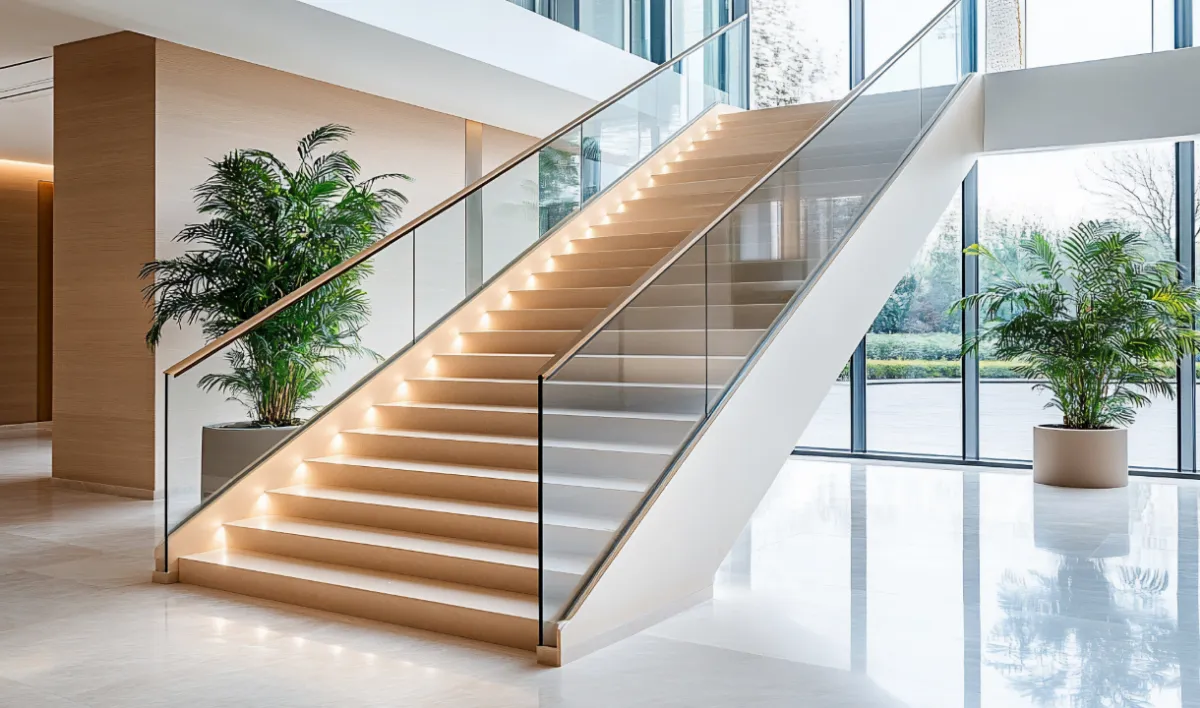
Frameless systems are where many homeowners fall in love fastest. They look clean, expensive, and visually quiet. On a balcony or staircase, they can preserve openness in a way few other systems can. That is why glass railing design features so strongly in premium homes, duplexes, and terraces.
But frameless does not mean structure-free. It means the structure has been reduced or visually hidden. The performance still depends on the base shoe, side mount, embedded channel, point fixings, and the glass specification itself. And because the glass carries the guarding role so visibly, small mistakes become very noticeable. Wavering lines, poor edge finishing, badly aligned panels, and the wrong hardware can weaken the whole result very quickly.
Aluminium railings do not always have the same instant drama as frameless glass, but they solve many residential conditions extremely well. They are lighter, more visibly defined, and often easier to tune to the style of the house. A slim powder-coated aluminium railing can still feel contemporary and premium without asking the railing to disappear fully.
There is also a practical material story here. The International Aluminium Institute describes aluminium building products as weather-proof, corrosion-resistant, and durable, while India’s own powder coating standard framework exists precisely because finish quality matters so much to long-term performance. In other words, powder-coated aluminium is not merely a colour choice. It relies on process quality, surface preparation, and coating integrity.
This is where frameless glass railing vs powder coated aluminium durability becomes a more useful comparison than “modern versus traditional”. Glass does not corrode, but it does show dust, marks, and edge-detail flaws quickly. Powder-coated aluminium does not have the same transparency, but when done well it can give you a steadier day-to-day ownership experience, especially in dusty or high-use homes.
If the balcony opens to a view and the whole point is to keep the sightline light, glass often makes more sense. This is especially true in villas, upper-floor decks, and homes where the exterior edge is meant to feel quiet and open. If privacy, stronger frame language, or easier day-to-day upkeep matter more, aluminium often becomes the better choice.
Glass can work beautifully on staircases, especially when the aim is to keep the stairs visually light. But stair railings also involve daily hand contact, edge safety, and often more visible indoor detailing. Aluminium can work better when you want a clearer handrail presence, stronger tactile comfort, or a more defined architectural line.
This is not a simple material verdict, but it does change the decision. In high-contact homes, the tolerance for constant wiping, fingerprints, or smudges becomes lower. That is where many families start leaning towards aluminium unless the design absolutely calls for glass.
The phrase maintenance cost of glass vs powder coated aluminium is one of those search terms that sounds purely financial, but in homes it usually means something broader. It includes cleaning effort, frequency of touch-ups, likelihood of visible wear, and how quickly the railing starts feeling less premium.
Glass often costs more to maintain in everyday effort rather than formal repair. You may not spend a large amount on the system each year, but you do spend time using it. Fingerprints, water spots, dust film, and edge grime show up quickly, especially on balconies and staircases with strong daylight. If the railing is external, the cleaning frequency usually increases.
Powder-coated aluminium usually has an easier routine. It still needs cleaning, especially in dusty, polluted areas, but it does not show every touch mark in the same way. The long-term cost pattern is also steadier if the coating has been specified and applied properly. In other words, glass often has a higher visual-maintenance burden, while aluminium usually has a more forgiving maintenance profile.
If you are weighing glass railing vs aluminium railing for an Indian home, the better choice depends on what matters most at that edge of the house. Glass gives you openness, cleaner sightlines, and a lighter visual result. Aluminium gives you a more visible frame, easier routine upkeep, and often stronger day-to-day practicality. Both can be safe. Both can be premium. Both can go wrong when the detailing is weak.
That is why the material choice should never be made from inspiration images alone. It should come from location, use, maintenance expectations, finish quality, and the kind of home you actually want to live in. We, at Fabricasto, see that as the difference between selecting a railing and resolving one properly. When the system is right, the railing stops feeling like a boundary. It starts feeling like part of the architecture.
Both can be safe if properly specified and installed. Glass should use laminated safety glass where it acts as a balustrade or railing, while aluminium needs correct member spacing, strong anchoring, and reliable handrail continuity. In family homes, the safer option is usually the one that has been designed more carefully for actual use.
A properly specified frameless glass railing is not meant to be fragile, but it should never be treated casually. The glass build-up, edge support, and fixing system all matter. The concern is not only whether glass can break, but whether the system has been designed to remain safe under impact and everyday guarding loads.
In many dusty urban conditions, powder-coated aluminium is easier to live with. Glass shows fingerprints, water spots, and dust film more quickly, especially in strong daylight. Aluminium still needs routine cleaning, but it usually asks for less visible upkeep. That is why many homeowners find the maintenance burden lower with aluminium railings.
If the balcony opens to a landscape, skyline, lawn, or other view-led setting, glass railing often makes more sense because it preserves visual continuity. That is where good glass railing design usually feels most justified. If the view is not a priority, aluminium may give you a more practical and equally refined result.
Mon - Sat 9.00 to 17.00
+91-9818630247
Mon - Sat 9.00 to 17.00
+91-9818630247

Fabricasto is a trusted provider of premium doors, windows, skylights, retractable roofs, and internal partition systems. We deliver innovative architectural solutions designed to enhance aesthetics, functionality, comfort, and long-term value for residential and commercial spaces.
341, CRC Estate, MG Road, Sultanpur, New Delhi 110030
SCO-7, Block-E, Mohali Citi Centre Avenue, Punjab
Faridabad, Pali Village, Haryana 121004