Aluminium Car Parking Canopy vs RCC Structure: Which Is a Smarter Investment for Indian Properties?
July 10, 2026
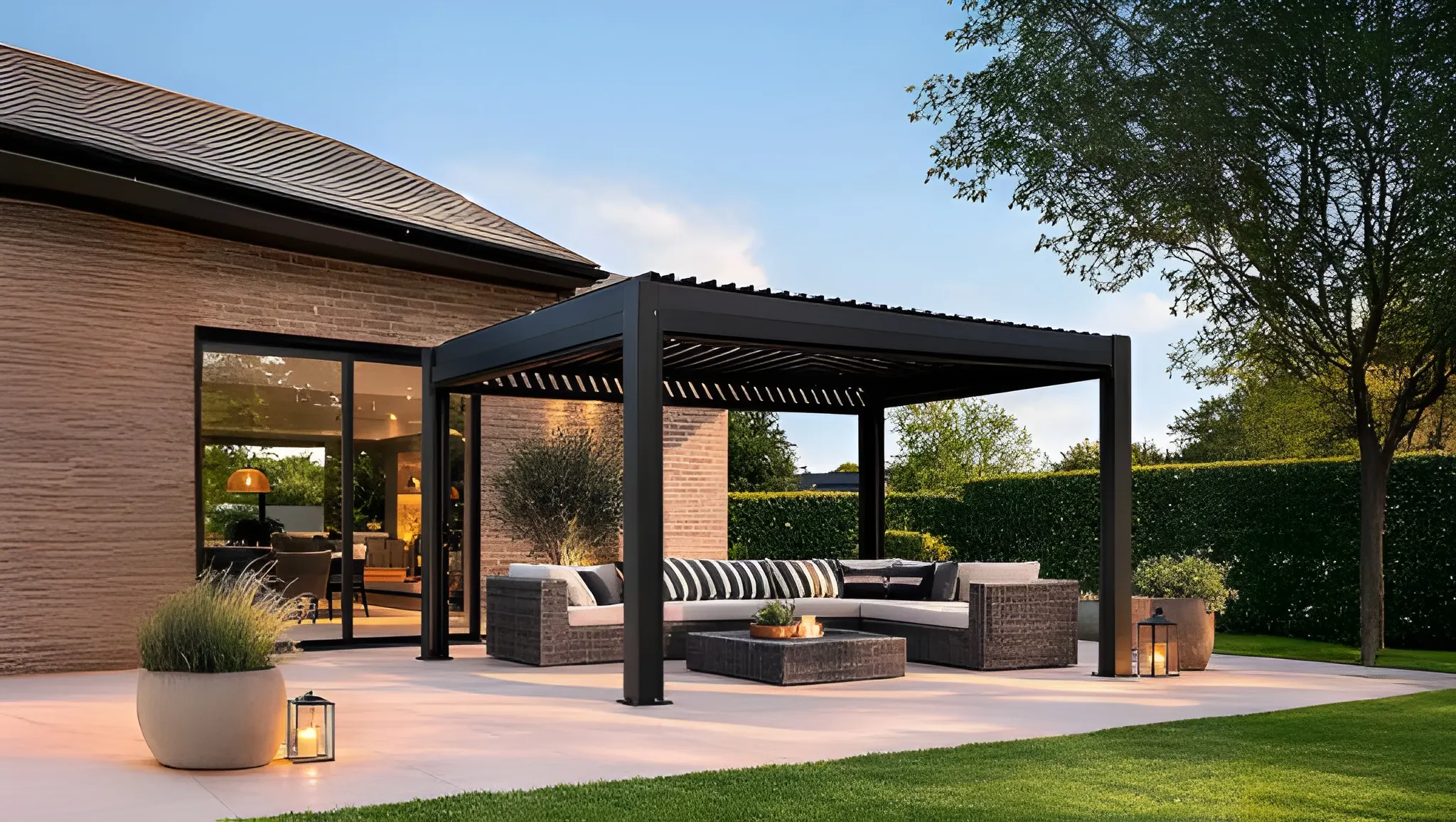
If you are planning an outdoor seating area in a garden, along a lawn edge, or on a terrace, a gazebo can seem like a simple upgrade at first. Put up a structure, add seating, and the job feels done. In reality, a good gazebo asks for much more thought than that. It has to manage sun, rain, drainage, wind, floor levels, structural support, and how you actually want to use the space through the year. That is why choosing the right aluminium gazebo for a garden in India is less about buying an outdoor feature and more about planning an outdoor room properly.
This becomes even more important in Indian homes because outdoor conditions are rarely mild or consistent. Summer heat can be sharp. Monsoon rain can be unpredictable. Dust build-up is real in many cities. Terrace waterproofing is often already under pressure before any new structure is added. So the gazebo cannot be treated as an accessory dropped into place after the main design is complete.
We, at Fabricasto, see gazebos in that wider context. On Fabricasto’s own platform, gazebos are positioned as outdoor structures designed for comfort, relaxation, and social use, while pergolas are framed around shade, visual appeal, and architectural integration. That distinction matters because the planning logic changes depending on whether you want a more defined covered zone or a lighter open-roof expression. In both cases, the quality of structure, material, and detailing is what decides whether the result feels long-lasting or temporary.
The first big question is usually about material. Timber can look warm. Steel can feel strong. Mild steel can seem familiar to many local fabricators. But for most premium residential outdoor settings, aluminium has begun making more sense because it balances durability, weight, finish control, and cleaner design better than many alternatives.
The International Aluminium Institute describes aluminium building products as weather-proof, corrosion-resistant, and resistant to UV-related deterioration, which is one reason aluminium continues to perform strongly in outdoor architectural applications. That does not mean every aluminium gazebo is automatically good. It means the base material gives you a more reliable starting point for an exterior structure that has to stay exposed throughout the year.
This is also where rust proof metal gazebo becomes more useful than it sounds. Many homeowners use that phrase because they are trying to avoid the repainting cycles, corrosion risks, and heavier maintenance burdens that often come with the wrong outdoor metal choice. Aluminium, when properly finished and detailed, answers that concern well. It gives you a cleaner exterior system without the same dependence on repeated anti-rust maintenance.
A lot of people use the words interchangeably. That is understandable, but the distinction matters when you start planning the budget, roof type, drainage, and use.
A gazebo usually creates a more complete covered zone. It feels more like an outdoor room. It may sit in a garden corner, by a lawn, beside a pool, or on a terrace as a defined place to sit, dine, or gather. A pergola, by contrast, is often more open in expression. It may give filtered shade, a lighter visual frame, or an architectural extension of the house rather than a more enclosed covered retreat.
This is the most intuitive location. A garden-facing gazebo provides a shaded area that still feels connected to the landscape. It works well for homes where the lawn is not only decorative but actually used for family time, evening tea, or small social gatherings. In this setting, the structure needs to feel grounded without becoming bulky.
An aluminium gazebo for a garden in India works especially well here because aluminium can carry slim, neat profiles while still giving you enough structural stability for a durable outdoor installation. It also sits comfortably beside planting, stone pathways, deck edges, and modern landscaping without looking too heavy.
A terrace gazebo solves a different problem. The need here is often not landscape integration but climate control. You may need a place to sit outside without full sun, or a covered area that makes a large terrace feel more usable during hotter months.
This is where the idea of a rooftop terrace aluminium gazebo in Delhi NCR becomes particularly relevant. In Delhi, Gurgaon, Noida, Faridabad, and nearby residential areas, terraces are exposed to strong summer heat, monsoon conditions, and dust. So the gazebo is not only a style choice. It becomes part of how usable the terrace actually is.
In homes with side lawns, inner courts, or semi-private outdoor zones, a gazebo can work as a more intimate extension of the house. In these conditions, the key is often proportion rather than scale. A large overbuilt structure can make the outdoor area feel compressed. A leaner aluminium system usually handles these tighter conditions better.
This is where many gazebo decisions improve or fail. A beautiful reference image does not tell you whether the structure suits your site.
The roof is where gazebo planning becomes much more specific.
Fixed roof gazebo: A fixed roof gives you clearer shelter and simpler use. It works well where the main goal is dependable shade and rain cover. But the right fixed roof still needs thought around heat build-up, drainage, and how enclosed the structure should feel from below.
Glazed roof gazebo: A glazed roof can feel elegant, but it needs careful glass specification. AIGMF’s guidance on glass in buildings makes the broader point that safety glazing and glass selection must respond to use, support conditions, and impact risk. So if a gazebo uses roof glazing or larger side glazing elements, it should never be detailed casually.
Motorized louvered roof: This is where things get especially interesting for premium homes. A motorized louvered aluminium gazebo in India offers something a fixed structure cannot: adjustable control. You can open the louvres for ventilation, close them for stronger shade, and tune the space more precisely through the day. This kind of system makes sense when the outdoor area needs to stay usable across changing weather and light conditions, not only at one ideal time of day.
A lot of search intent lands here because people want a quick benchmark. That is understandable. The phrase aluminium gazebo price per sq ft in India is a real decision-stage query. But it is also where buyers most often get misled.
A per-square-foot rate can only tell you something useful when the system specification is already clear. Without that, the number hides more than it reveals. Roof type changes cost. Motorisation changes cost. Span changes cost. Base preparation changes cost. Lighting integration changes cost. Gutter detailing, drainage strategy, and finishing level change cost. So two gazebos that look similar in a thumbnail image can sit in completely different cost brackets.
The more useful way to compare budgets is to ask what is included:
| Cost Component | What to Verify in Your Quote |
|---|---|
| Frame Specification | Aluminium grade, profile thickness, and structural load capacity. |
| Roof System | Whether it is fixed, safety-glazed, or a multi-panel louvre setup. |
| Operation & Controls | Manual mechanics vs. motorized automation systems and sensors. |
| Water Management | Integrated gutter details, downpipes, and structural drainage paths. |
| Finish Quality | Powder-coating standards, UV resistance ratings, and color warranties. |
| Execution Scope | Site preparation, anchoring engineering, sealants, and final assembly labor. |
That is why the per-square-foot figure should be treated as an estimate framework, not a buying decision.
A well-designed aluminium gazebo for a garden in India does far more than add shade. It can make a lawn corner more usable, turn a terrace into a real outdoor room, and give the home a better relationship with its exterior spaces. But that only happens when the gazebo is planned as a serious architectural element, not bought as an outdoor accessory.
If you are comparing options, the right question is not simply what looks good in a catalogue. It is what will sit well on your site, handle your climate, work with your home, and still feel right after seasons of use. We, at Fabricasto, approach gazebos with that longer view. That is what turns a good-looking structure into one that actually lives well with the house.
Yes, it can be an excellent choice when properly designed and finished. Aluminium suits Indian outdoor conditions well because it resists corrosion better than many common metal alternatives and handles prolonged weather exposure effectively. The real result, though, depends on profile quality, finish quality, roof design, and the way the structure is installed on site.
A gazebo usually gives you a more covered and room-like outdoor space, while a pergola is often lighter and more open in form. The right choice depends on what you need from the structure. If the goal is a stronger shelter and a more defined sitting zone, a gazebo often makes more sense than a pergola.
The square-foot rate changes depending on the roof type, profile depth, finish quality, span, motorisation, drainage detailing, and installation conditions. That is why the aluminium gazebo price per sq ft in India is not a complete decision tool on its own. You need to know what is included before the number means much.
Mon - Sat 9.00 to 17.00
+91-9818630247
Mon - Sat 9.00 to 17.00
+91-9818630247

Fabricasto is a trusted provider of premium doors, windows, skylights, retractable roofs, and internal partition systems. We deliver innovative architectural solutions designed to enhance aesthetics, functionality, comfort, and long-term value for residential and commercial spaces.
341, CRC Estate, MG Road, Sultanpur, New Delhi 110030
SCO-7, Block-E, Mohali Citi Centre Avenue, Punjab
Faridabad, Pali Village, Haryana 121004