Why Choose Pivot Doors for Your Premium Indian Home?
July 09, 2026
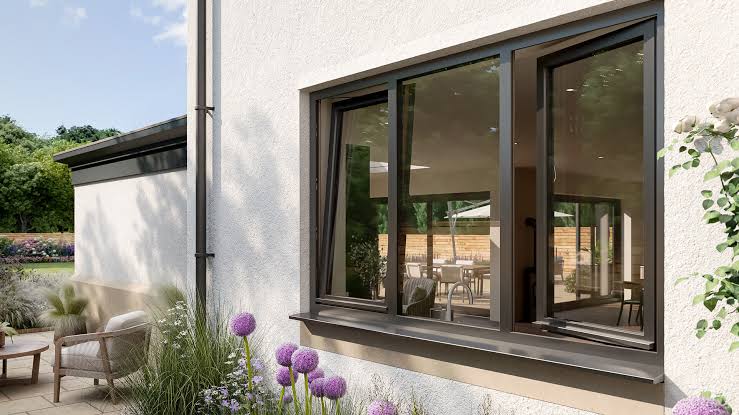
Aluminium windows are strong, slim, and well-suited to large openings. That is why they are used so often in villas, premium apartments, farmhouses, and modern homes. However, the one thing you need to check carefully when installing them is thermal performance, especially when the window faces strong sunlight, air conditioning, or large glass areas.
We, at Fabricasto, look at thermal break aluminium windows in India as complete systems. The frame, glass, gasket, hardware, track, drainage, and site fixing all affect comfort. A good aluminium window should look clean, open smoothly, seal properly, and support better indoor comfort throughout the year.
So, a thermal break is an insulating strip placed between the outer and inner sections of an aluminium window frame. In many high-performance systems, this strip is made from polyamide or a similar low-conductivity material. Aluminium conducts heat easily. But without a thermal break, heat can move through the frame more directly. In the summer, that means outside heat can pass into the room through the frame. However, in the winter or in air-conditioned spaces, the reverse can also happen. The thermal break interrupts that path by separating the external aluminium profile from the internal aluminium profile, so the frame does not behave like one continuous heat bridge.
Indian homes deal with very different climate conditions. Delhi NCR experiences sharp summer heat and dusty outdoor conditions; coastal cities face humidity and salt air; and homes in colder climates need better insulation during colder months. In premium villas, large glass openings are common across all these locations.
For thermal break aluminium windows in India projects, the main value is controlled comfort. These systems help reduce unwanted heat transfer through the frame and can also support better energy use when rooms are air-conditioned for long hours.
The Bureau of Energy Efficiency’s building energy guidance treats the building envelope, including windows and glazing, as part of energy performance. That matters because windows are no longer chosen only for view or style. They affect heat, daylight, cooling demand, and daily comfort.
Thermal break frames work best when the glass is chosen with equal care. So, if you use a high-performance frame with poorly selected glass, the overall window may still underperform.
The process of double glazing uses two glass panes with an air or gas-filled space between them, which helps reduce heat transfer compared to single-glazed windows. When double glazing is combined with a thermal break frame, the window system can perform better across both the glass and the frame.
The result depends on the full specification and factors such as the glass type, spacer, frame depth, seals, locking, and installation, all matter.
| Component | What it does | Why it matters |
|---|---|---|
| Thermal break frame | Reduces heat transfer through aluminium | Improves frame comfort and performance |
| Double glazing | Reduces heat transfer through glass | Supports cooling and acoustic comfort |
| Gaskets and seals | Reduce air leakage around the sash | Helps with dust, noise, and energy use |
| Hardware | Pulls the sash firmly into position | Improves sealing and daily operation |
| Installation | Fixes the system into the wall correctly | Prevents gaps, leakage, and poor alignment |
The cost of a double-glazed thermal break window depends on the system, glass, size, opening type, hardware, finish, and site conditions.
A fixed window will usually cost less than a large sliding or lift-and-slide system. A balcony opening with double glazing, thermal break profiles, multipoint locking, and stronger tracks will cost differently from a smaller bedroom window. Large panels also need careful handling and installation.
Before finalising a quote, ask what is included. Check whether the price covers the thermal break profile, glass specification, hardware, mosquito screen (if needed), drainage details, installation, sealants, and final adjustment. Low quotes often leave out the parts that decide long-term comfort.
When comparing insulated aluminium windows manufacturers in India, do not look only at brochures or profile names. Ask how the system is fabricated, tested, installed, and supported on-site. Good insulated aluminium windows need accurate cutting, corner jointing, gasket placement, hardware fitting, drainage planning, and glass installation. A strong profile can fail in daily use if fabrication is careless. You should check the following:
Energy-efficient sliding windows for villas require more care because villa openings are often larger than standard apartment windows. Living rooms, double-height areas, bedrooms, decks, and garden-facing walls may all use wider glass panels.
Sliding windows need clean movement and good sealing. In many basic systems, sliding tracks can allow more air movement than casement-style windows. Better systems use improved interlocks, gaskets, rollers, drainage, and locking points to control comfort.
Thermal break systems help when the frame itself is exposed to strong sun or when separating outdoor heat from air-conditioned interiors. They become especially useful in villas with large openings, west-facing glass, or spaces that remain cooled for long hours.
Slim-line thermal break aluminium windows are often chosen for premium homes because they reduce the visible frame width and allow wider views. The challenge is to keep the system slim without losing performance.
A slim frame still needs enough depth for the thermal break, glass support, drainage, hardware, and structural stability. If the frame becomes too light for the panel size, movement and sealing may suffer. The right system should balance sightline, panel size, glass weight, wind exposure, and daily use.
At Fabricasto, we help architects and homeowners assess this balance early, especially for large-format windows and sliding openings where the visual requirement is strong.
Now, when you discuss thermal performance, you may hear terms such as U-value and SHGC. The U-value measures how much heat passes through a building element. A lower U-value generally means better insulation. SHGC, or solar heat gain coefficient, relates to how much solar heat passes through glass.
These values matter because a window includes both frame and glass. A thermal break improves the frame’s behaviour, while glass selection affects light, glare, and heat gain. A window facing harsh afternoon sun may need different glass from a shaded north-facing opening. For Indian homes, glass selection should be linked to orientation. A cool-looking, clear glass may bring in too much heat on a west-facing elevation. A tinted or high-performance glass may help, but it should still allow enough daylight for the room.
Thermal break windows can be a strong choice, but the benefits diminish when the specification is incomplete or the installation is poor. Some of the most common mistakes include:
The best results come when windows are discussed while the architectural and site details are still open.
Thermal break windows require system knowledge and site discipline. The frame has to suit the opening, the glass has to suit the climate and orientation, the hardware has to suit the shutter size, and the installation has to protect alignment, sealing, and drainage.
We, at Fabricasto, support homeowners and architects through measurement, system selection, glass coordination, fabrication planning, installation sequencing, and final adjustment. Our role is to make sure the window is not treated as an isolated product.
A thermal break in aluminium windows reduces direct heat transfer through the frame. For Indian homes, this matters because large windows often face heat, air-conditioning loads, dust, and changing weather. The right system can support better comfort when paired with suitable glass, sealing, drainage, and installation.
If you are exploring thermal break aluminium windows for projects in India, start with the room, orientation, glass area, and expected use. We, at Fabricasto, help bring the system, fabrication, and execution thinking needed to make insulated aluminium windows work properly in real homes.
Thermal Break aluminium windows for India projects use aluminium frames with an insulating barrier between the outer and inner profile sections. This helps reduce heat transfer through the frame. They are useful for premium homes with large openings, air-conditioned rooms, strong sun exposure, or a need for better indoor comfort.
A thermal break works by placing a low-conductivity barrier inside the aluminium frame to interrupt direct heat transfer. Aluminium conducts heat easily, so the barrier helps separate the outdoor-facing frame from the indoor-facing frame. This improves the window’s thermal behaviour when the full system is specified correctly.
Thermal break windows are useful in Indian weather when homes face strong sun, air-conditioning use, large glass areas, or colder hill climates. They help reduce heat transfer through the frame. Their performance improves further when paired with suitable glass, good sealing, correct drainage, and careful installation.
Double-glazed thermal break window cost depends on frame system, glass type, window size, opening style, hardware, finish, fabrication, and installation. Sliding, lift-and-slide, fixed, and casement windows can all cost differently. A proper quote should mention frame, glass, hardware, sealants, drainage, and installation scope.
Compare insulated aluminium windows manufacturers in India by checking system details, glass specification, fabrication quality, hardware selection, installation method, warranty support, and past project experience. A good manufacturer should explain how the frame, glass, gasket, drainage, locking, and site fixing work together.

Mon - Sat 9.00 to 17.00
+91-9818630247
Mon - Sat 9.00 to 17.00
+91-9818630247

Fabricasto is a trusted provider of premium doors, windows, skylights, retractable roofs, and internal partition systems. We deliver innovative architectural solutions designed to enhance aesthetics, functionality, comfort, and long-term value for residential and commercial spaces.
341, CRC Estate, MG Road, Sultanpur, New Delhi 110030
SCO-7, Block-E, Mohali Citi Centre Avenue, Punjab
Faridabad, Pali Village, Haryana 121004