What Is Thermal break in Aluminium Windows and Why Does It Matter for Indian Homes?
July 09, 2026
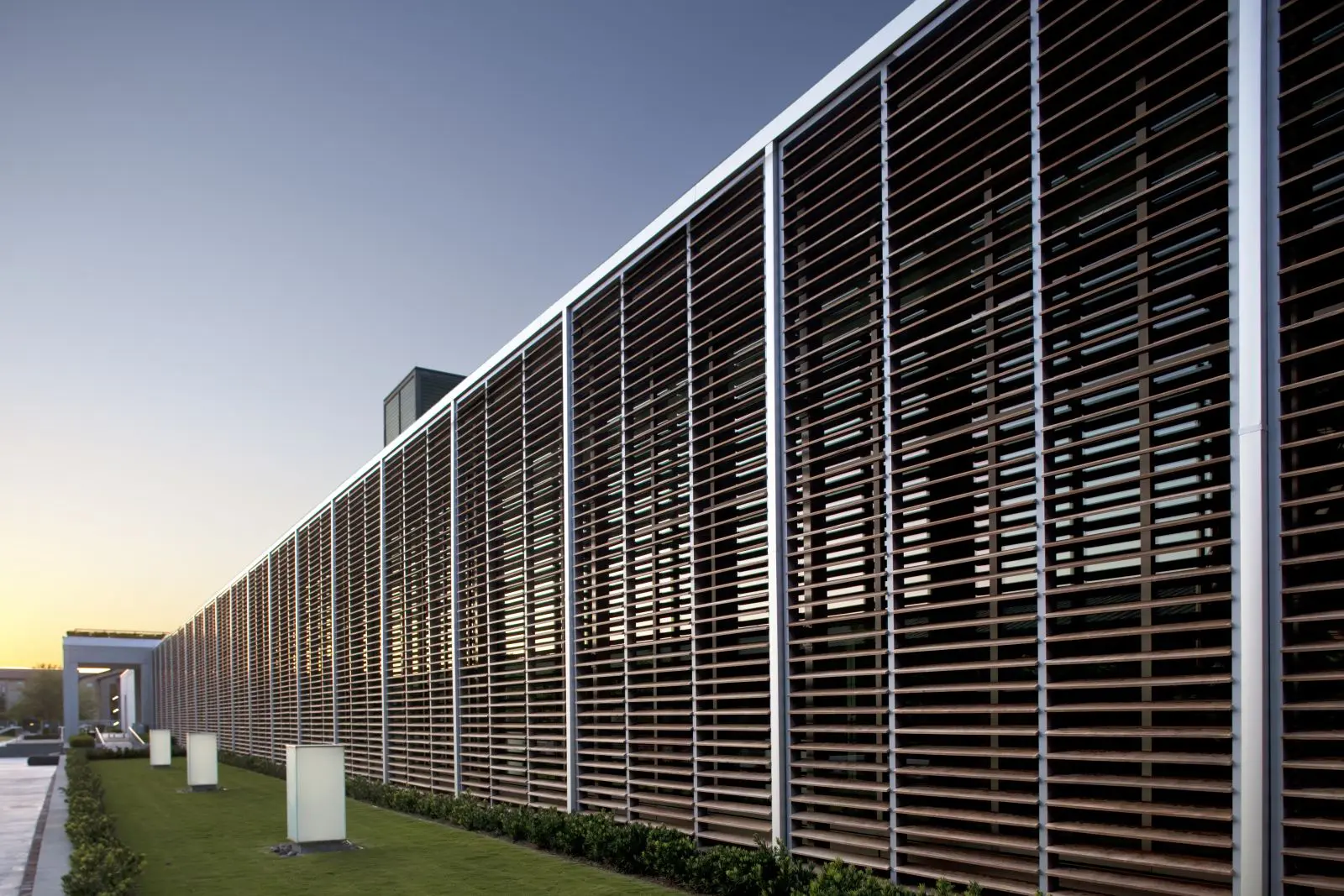
A building’s façade does more than define its exterior. It affects heat gain, privacy, airflow, daylight, maintenance, and the way the building is read from the street. And in Gurgaon and Delhi NCR, these decisions need even more care. Buildings here deal with strong sun, dust, changing temperatures, tight plots, and exposed elevations. A façade material has to hold its finish, manage exposure, support the design intent, and stay practical to maintain over time.
That is why aluminium façade cladding and metal louvre systems are being considered more seriously across premium homes, villas, showrooms, and boutique commercial projects in the region. Both can give a building a cleaner and more controlled exterior, but they do different jobs. Cladding shapes and protects the building envelope, while louvres help manage sun, privacy, ventilation, and visual depth.
In this blog, we look at how metal façades and louvre systems work, where each one makes sense, and what you should check before choosing them for a project in India.
Aluminium cladding is attached to the exterior of a building using a framework. It covers the walls, makes the elevations look cleaner, adds depth, hides services, protects surfaces and supports a more refined architectural expression. It works well for designs that need to be light, have clean lines, and have controlled details.
This is especially true because, unlike other materials, aluminium is easier to fabricate into panels, fins, folded profiles, and customised shapes. This makes it useful for villas, premium homes, showrooms, offices, clubhouses, and boutique commercial projects. The system should be selected based on exposure, panel size, wind load, finish, fixing method, and maintenance. A façade that looks simple from the outside often has several layers behind it.
For aluminium façade cladding in Gurgaon projects, heat exposure should be discussed early. Gurgaon is known for its long summer months, dusty conditions, and many sites with strong west or south-west sun. The façade should respond to those conditions rather than only follow a visual reference.
Metal panels can heat up under direct sunlight, so the design needs a ventilated gap, a proper coating, a stable substructure, and proper fixing. If the façade also includes glazing, the relationship between glass, shading, and metal cladding becomes important. A good façade should also consider site access. Large panels need careful handling, storage, lifting, and installation. If these steps are ignored, even a well-made panel can arrive on site and still end up scratched, misaligned, or damaged.
The solid aluminium cladding sheet cost in NCR depends on several practical factors. A simple per sq ft number rarely tells the full story because panel thickness, coating, folding, cutting, substructure, access, and installation effort all affect the quote.
| Cost Factor | What It Affects |
|---|---|
| Panel thickness | Strength, flatness, weight, and fabrication cost. |
| Finish and coating | UV resistance, colour stability, and maintenance requirements. |
| Panel size | Joint planning, material wastage, handling, and installation. |
| Folding or perforation | Fabrication time and overall design complexity. |
| Substructure | Panel alignment, ventilation gap, and long-term stability. |
| Site access | Labour requirements, scaffolding, lifting, and surface protection. |
A correct quote should explain what is included. It should not leave the panel, frame, screws, coating, installation, and finishing details unclear.
Heat-resistant building façade materials in Gurgaon options depend on colour, finish, thickness, cavity design, shading, airflow, and the wall behind the façade. So, a light-coloured or high-quality coated metal surface may behave differently from a dark panel under direct sunlight. A ventilated façade can also help, as the air gap behind the cladding allows heat to move rather than sitting directly against the wall.
Before finalising the material, check the following:
The best façade decision balances appearance, heat response, and service life.
UV-resistant metal façade panels in Delhi NCR are important because exterior surfaces are exposed to strong sunlight for years. So, a panel that looks sharp at handover should not fade unevenly, chalk, stain, or lose its finish too quickly.
Powder coating, PVDF-type coatings, anodised finishes, and other treated finishes behave differently under the sun, dust, pollution, and cleaning. The right choice depends on the building type, colour, exposure, and maintenance expectations.
Colour choice also affects how the façade ages. Darker finishes can give the elevation more weight and contrast, but they tend to show dust, surface heating, water marks, and uneven fading more quickly on exposed elevations. Lighter finishes are often easier to live with in Delhi-NCR conditions, especially on sun-facing sides, but the final choice should still be informed by the building’s design language, exposure, and maintenance plan.
3D folded metal façade cladding panels are useful when you are in need of depth, shadow, rhythm, or a sculpted surface. They can create fins, folds, boxes, angled profiles, and layered elevations. These panels need accurate fabrication, which is why shop drawings are important. Panel module, bend radius, joint spacing, fixing location, drainage, and installation sequence should be resolved before fabrication begins. A folded façade only looks clean when the geometry and site execution agree with each other.
An aluminium louvre façade system Gurgaon project can solve several needs at once. Louvres can reduce direct sun, create privacy, allow airflow, hide services, and add depth to a building’s elevation. This makes the louvre angle become the main detail. A shallow angle may look light, but it may not block enough sun. A deeper angle can improve shading but may reduce views or daylight. The spacing, section size, fixing, and orientation all affect performance.
Louvres work well for terraces, staircases, service zones, balconies, plant areas, and large glazed elevations. They should be designed around the sun path, room use, privacy needs, and maintenance access. Guessing the angle usually leads to compromise.
A façade system depends on details that many people do not see after completion. These include brackets, fasteners, expansion gaps, panel joints, corner returns, drainage paths, and sealant lines. Site tolerance is one of the biggest issues. Civil surfaces may not be perfectly straight, but metal panels need clean alignment. This means the substructure must correct minor surface variation before the final panels go on. Before installation, the team should check:
In premium projects, façades rarely work alone. They often meet large windows, sliding doors, glazing systems, pergolas, and shading elements. This is where system-based thinking becomes useful.
Brands such as Cortizo bring a structured approach to aluminium systems, large openings, and façade-related performance. For homeowners and architects, the value lies in using the right system for the right condition, rather than treating every opening or façade element as a separate purchase.
Metal façades and louvre systems need design sensitivity, fabrication control, and site discipline. A good result depends on how the panel is drawn, made, finished, transported, fixed, aligned, and handed over.
We, at Fabricasto, work with homeowners, architects, consultants, and site teams to bring this process together. Our role includes system selection, measurement, shop drawings, material coordination, fabrication planning, installation support, and final detailing.
This matters most in premium homes and commercial projects where the façade is part of the building’s identity. The system should look refined, manage exposure, and hold its quality over time.
Metal façades and louvre systems can change how a building looks, feels, and performs. For Indian projects, especially in Gurgaon and Delhi NCR, the right façade should respond to heat, UV exposure, dust, privacy, ventilation, and site realities.
If you are planning aluminium façade cladding in Gurgaon, 3D folded panels, UV-resistant metal panels, or an aluminium louvre façade system, begin with the building condition and design intent. We, at Fabricasto, help turn those requirements into a system that is measured, fabricated, detailed, and executed with care.
Aluminium façade cladding in Gurgaon is used to create clean building elevations, protect external surfaces, add depth, hide services, and enhance architectural finishes. It suits villas, premium homes, offices, showrooms, and clubhouses. The final performance depends on panel quality, coating, fixing, substructure, ventilation gap, and site execution.
Solid aluminium cladding sheet cost in NCR depends on panel thickness, finish, coating, folding, perforation, panel size, substructure, installation height, site access, and wastage. A basic per sq ft rate should be checked carefully because it may not include brackets, fasteners, shop drawings, scaffolding, protection, or installation complexity.
Heat-resistant building façade materials in Gurgaon should be selected based on orientation, colour, finish, air gap, wall condition, and shading needs. Aluminium panels with suitable coatings and ventilated fixing can perform well when detailed properly. The system should reduce trapped heat and support long-term exterior use.
UV-resistant metal façade panels in Delhi NCR are useful because external surfaces are exposed to strong sunlight, dust, and pollution. Good coatings help reduce fading, chalking, staining, and uneven ageing. They matter more on exposed elevations, darker colours, large panels, and façades where long-term appearance is important.
3D folded metal façade cladding panels are metal panels fabricated with folds, bends, fins, boxes, or angled profiles to create depth and shadow on a façade. They need accurate shop drawings, bending, joint planning, fixing, and installation. Small fabrication errors can affect the final surface alignment.
An aluminium louvre façade system in Gurgaon helps with shading, privacy, airflow, service screening, and depth of elevation. The angle, spacing, section size, and orientation decide how well it works. Louvres can be used for balconies, terraces, staircases, service areas, and glazed elevations that need sun control.
Aluminium works well when the project requires lightweight, clean fabrication, corrosion resistance, and design flexibility. It can be folded, cut, perforated, and finished in different ways. The right choice still depends on the project. Stone, glass, fibre cement, and other materials may suit other conditions.
Before installing metal façade panels, check wall alignment, substructure design, fixing method, panel size, coating, drainage, movement gaps, access, and protection during installation. Civil surfaces often need correction through framing. If the support system is not aligned, the finished façade may look uneven.
Cortizo systems can be considered where aluminium openings, sliding systems, and façade-related details need coordinated performance. In premium projects, windows, doors, cladding, and louvres should be planned together. Fabricasto helps architects and homeowners assess how these systems meet site conditions and design intent.
Fabricasto works on metal façades and louvre systems through measurement, system selection, shop drawings, fabrication planning, finish coordination, installation support, and final detailing. We help homeowners and architects translate façade intent into built systems that respond to heat, privacy, ventilation, exposure, and long-term use.
Mon - Sat 9.00 to 17.00
+91-9818630247
Mon - Sat 9.00 to 17.00
+91-9818630247

Fabricasto is a trusted provider of premium doors, windows, skylights, retractable roofs, and internal partition systems. We deliver innovative architectural solutions designed to enhance aesthetics, functionality, comfort, and long-term value for residential and commercial spaces.
341, CRC Estate, MG Road, Sultanpur, New Delhi 110030
SCO-7, Block-E, Mohali Citi Centre Avenue, Punjab
Faridabad, Pali Village, Haryana 121004